


On February 25, 1945, a letter arrived at the Geneva Steel plant in Vineyard, Utah. Three American airmen had written to say they were ready, willing, and able to go to work. There was one small problem. The company would have to come get them. Sergeant Mike J. Komo of Liverpool, Ohio. Sergeant Keith E. Kay of Santaquin, Utah. Sergeant F.W. Hueson of Idaho Falls, Idaho. They were being held in a prisoner of war camp at Kriefagefangenenpost, Germany.
The Deseret News reported this detail in 1992, fifty years after the plant's construction, and it appeared as a small anecdote near the middle of the article, given no more weight than any other fact. That is how most of Geneva Steel's human story has been recorded. In fragments. In passing. In single sentences buried inside longer accounts of tonnage and cost.
Consider the letter. Consider Sergeant Kay. He was from Santaquin. A town of perhaps a thousand people in 1945, fifteen minutes south of the steel plant on the shore of Utah Lake. He had grown up in a valley of orchards and small farms and churches, and now he sat in a camp in Germany, and what he wanted, what he wrote down and mailed across an ocean and a continent and a war, was a job at the mill.
Whether he got one, nobody ever bothered to record.
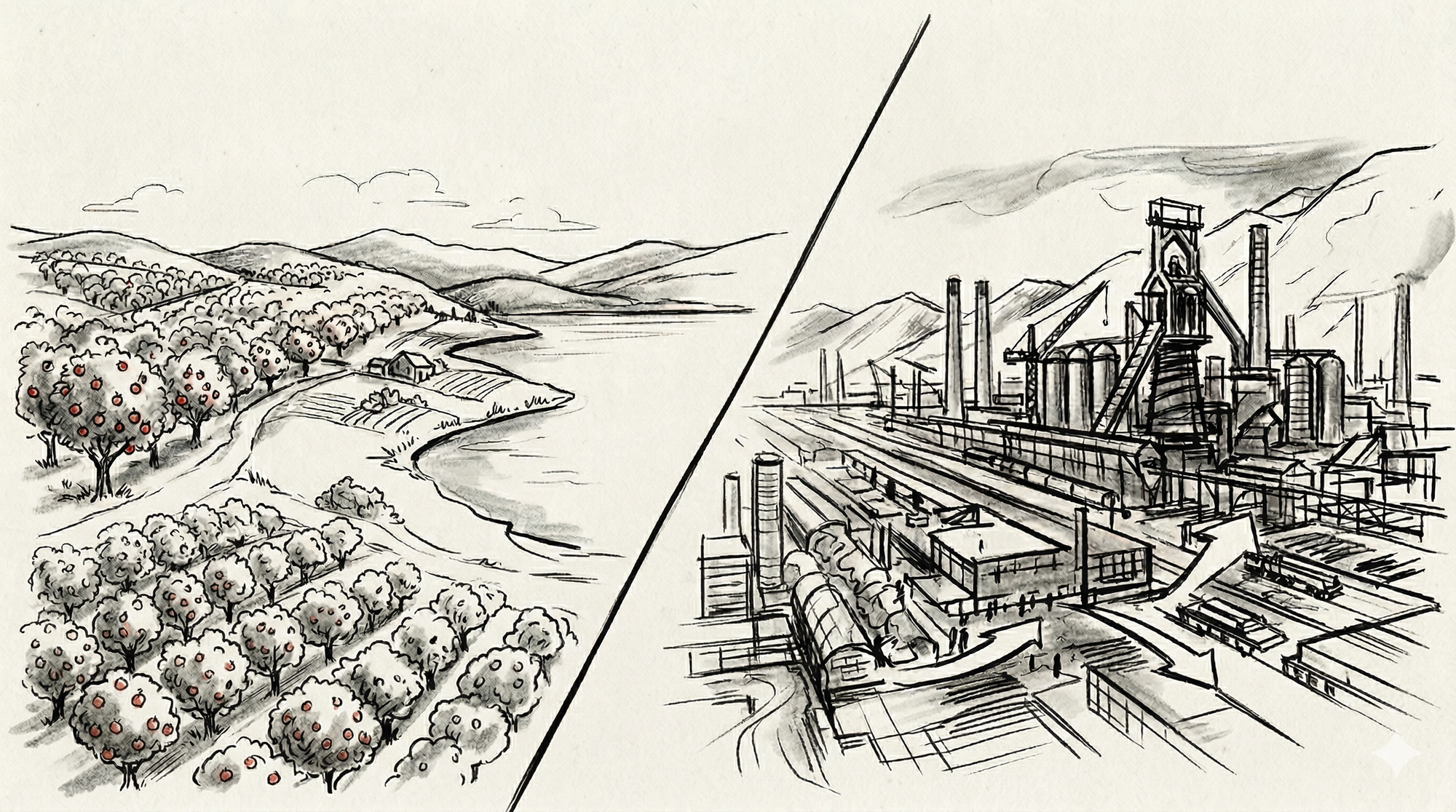
The story of Geneva Steel during the Second World War is a story about scale and speed and national emergency. It is also a story about a valley that was one thing and another thing entirely within two years. And it is a story in which nearly every individual has been forgotten.
Before the war, Provo was known as Utah's Garden City. Fruit orchards covered the valley floor. Small farms ran to the edge of Utah Lake. Orem had a population of 2,914. The state had been devastated by the Depression. In the late 1930s, Utah had 30 to 60 percent more people receiving federal relief than the national average. The national unemployment rate peaked at twenty-five percent. In Utah, it reached thirty-six.
President Franklin D. Roosevelt had first proposed a steel mill in Utah in 1936. It was a New Deal scheme. It went nowhere and was shelved within months. Five years later, as America struggled to keep the Allies supplied with food and ammunition and fuel, the idea was resurrected. In November 1941, one month before Pearl Harbor, the plans were dusted off and given the go-ahead. The Japanese attack made the plant a critical priority overnight.
But the decision to build Geneva did not emerge from a vacuum. It emerged from the radio.
On the evening of December 29, 1940, nearly a year before construction began, Roosevelt sat before a microphone in the White House and delivered what became known as the "Arsenal of Democracy" speech. Fifty-nine percent of the radio audience was listening. He told them that private industry could not be expected to finance the expansion of factories on its own, not when a change in international affairs might stop future orders a year or two hence.
"Therefore, the Government of the United States stands ready to advance the necessary money to help provide for the enlargement of factories, the establishment of new plants, the employment of thousands of necessary workers, the development of new sources of supply for the hundreds of raw materials required."
That sentence led to Geneva Steel. It created the Defense Plant Corporation, a subsidiary of the Reconstruction Finance Corporation, which would go on to invest over $9 billion in more than 2,300 wartime projects across 46 states. Geneva, designated Plancor 301, would become the single largest of all of them.
The steel industry had resisted expansion. Bethlehem Steel's chief executive said the facilities would carry "no commercial value" and that his company was "not warranted in spending our stockholders' money." Roosevelt's answer, delivered via radio to millions of Americans on a winter night, was that the government would pay. It would own the plants. It would lease them to private companies. And when the war was over, it would figure out what to do with them then.
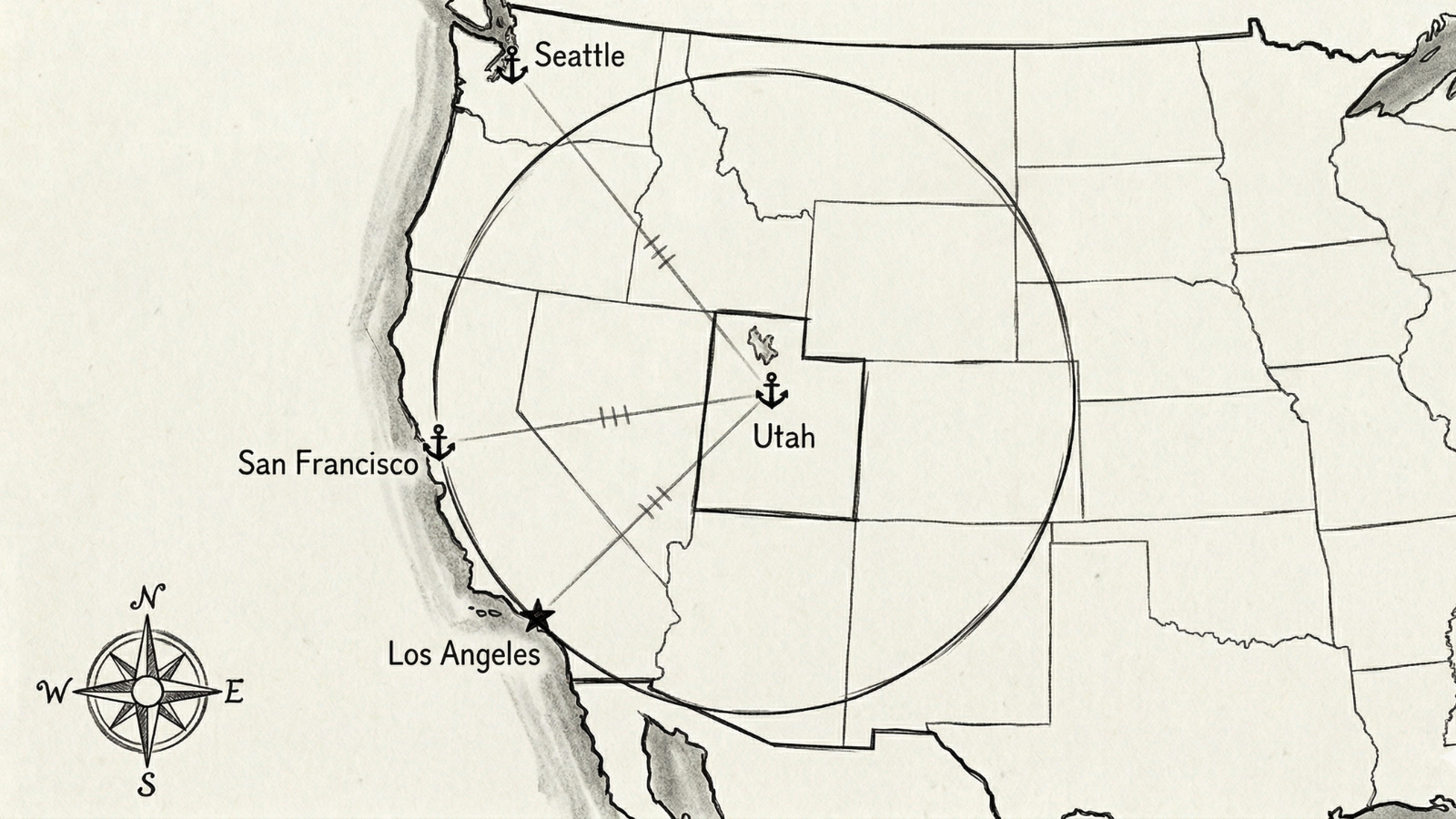
The logic of placing the mill in Utah Valley was strategic and practical. Most of America's steel production was clustered in the Midwest and along the coasts, vulnerable to attack and supply disruption. Utah was inland. Roughly equidistant from Seattle, San Francisco, and Los Angeles, the three principal West Coast ports. Coal deposits sat in Carbon County. Iron ore lay in Iron County. Limestone and dolomite could be quarried near Payson. Water could be drawn from Deer Creek Reservoir. Two railroads passed through the valley. And the land was there, open and available, owned by farmers who had been farming it for generations.
A total of $311 million in federal funds was authorized for Utah during the war, representing 38% of the entire Mountain States' total. Ninety-one percent of the state's wartime industrial expansion was financed by public funds. The national per capita expenditure for new industrial plants was $188. In Utah, it was $534. Geneva Steel was the single largest piece of that spending.
By March 1942, the government had purchased 1,600 acres of farmland on the eastern shore of Utah Lake. The land belonged to a man named J.O. Stone. That is the entirety of what the public record says about him. One sentence. A man lost his farm so that the largest wartime industrial project the United States government ever financed could be built on the spot where his crops had grown, and no one wrote down what he thought about it, what he was paid, or where he went.
In April 1942, the site was cleared of the small farm buildings that dotted the area. Construction began.
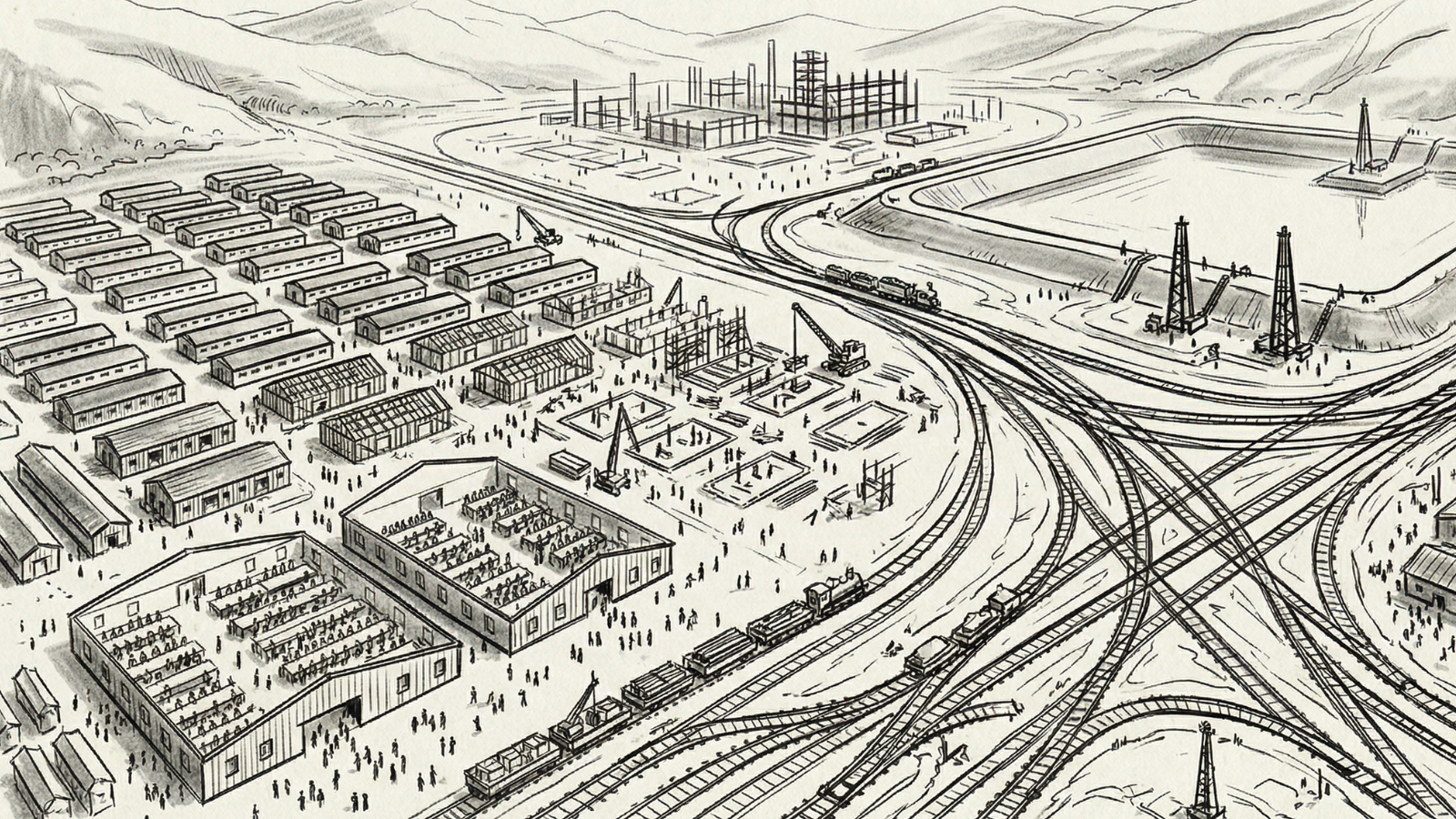
The scale of what happened next is difficult to comprehend without the numbers, so here are the numbers.
Ten thousand workers were mobilized to build the plant. Ten barracks, each housing a hundred men, went up first, with twenty more under construction. Restaurants and canteen facilities could seat 1,600 people at once. Sixty miles of railroad track were laid within the plant site. A 312-acre water reservoir was constructed from deep wells. The cost, initially estimated at $150 million, rose to $180 million when a third blast furnace was added, and reached a final figure of $205 million.
The arrangement between the government and private industry was particular. The government owned the plant. U.S. Steel built it through its west coast subsidiary, Columbia Steel Company. A new subsidiary, Geneva Steel Company, was organized in the summer of 1943 to operate the facilities. The contract specified that U.S. Steel would run the plant for the duration of the conflict without profit or fee. Roosevelt promised the government would advance the money. Convenient, given the steel companies said they would not spend their own. So that is what happened. The taxpayers built it. The corporation ran it. The workers poured the steel. And nobody made a profit (at least not officially) until the war was over.
The man chosen to lead the operation was Walter Mathesius. He had been vice-president in charge of U.S. Steel's operations in Delaware and was considered one of the world's foremost authorities on blast furnaces. He was elected president and director of the new Geneva Steel Company. Under him were J.R. Gregory as vice-president of sales, J.E. Butler as comptroller, J. Wohlwend as treasurer, and Merrill Russell as secretary and general attorney. E.M. Barber, a vice-president and general manager of another U.S. Steel subsidiary, was appointed to supervise construction as executive officer of Columbia Steel's defense plant division.
These men are named in a 1963 article in the Utah Historical Quarterly and in a few lines of a master's thesis at Brigham Young University. None of them has a biographical profile in the public record. Mathesius, a world-class metallurgist sent from the East Coast to the Utah Valley floor to run the most expensive wartime factory in America, does not appear to have an obituary. He gave speeches to the Payson Chamber of Commerce. He solved the problem of making Utah coal produce viable coke for steelmaking, a technical challenge that had stymied previous attempts. He oversaw the production of hundreds of thousands of tons of plate steel that went into Liberty ships and shell casings. Then he disappeared from the record.
Construction was supposed to take a year. It took twenty months. A series of fires threw off the schedule. Shortages of workers, equipment, and materials compounded the delays. The plant came online in stages, each one a small miracle of industrial logistics.
On December 14, 1943, the first coke was produced. Not the kind of coke that comes out of Colombia. Coke is coal that has been baked at extremely high temperatures in an oxygen-free oven until the volatile gases and impurities burn off. What's left is an almost pure carbon fuel, hard and porous, that burns hot enough and strong enough to melt iron ore in a blast furnace. Regular coal can't do the job. It's too soft, too wet, too full of gases. It would collapse under the weight of the ore and limestone stacked above it in the furnace. Coke maintains its structure, sustains airflow, and generates the intense heat needed to reduce iron ore to molten pig iron.
Making coke from coal was the initial phase of steelmaking, and it was the first test of whether Utah's high-volatile coal could do what Eastern coal had always done. It could, though it yielded only sixty percent coke compared to seventy-four percent in the East. The difference was offset by higher quantities of chemical by-products.
On January 3, 1944, pig iron production began. On February 4, the first open-hearth steel was tapped. On March 22, the first plate was rolled. And in April 1944, Geneva shipped its first order: 600 tons of steel plate, bound for California shipyards.
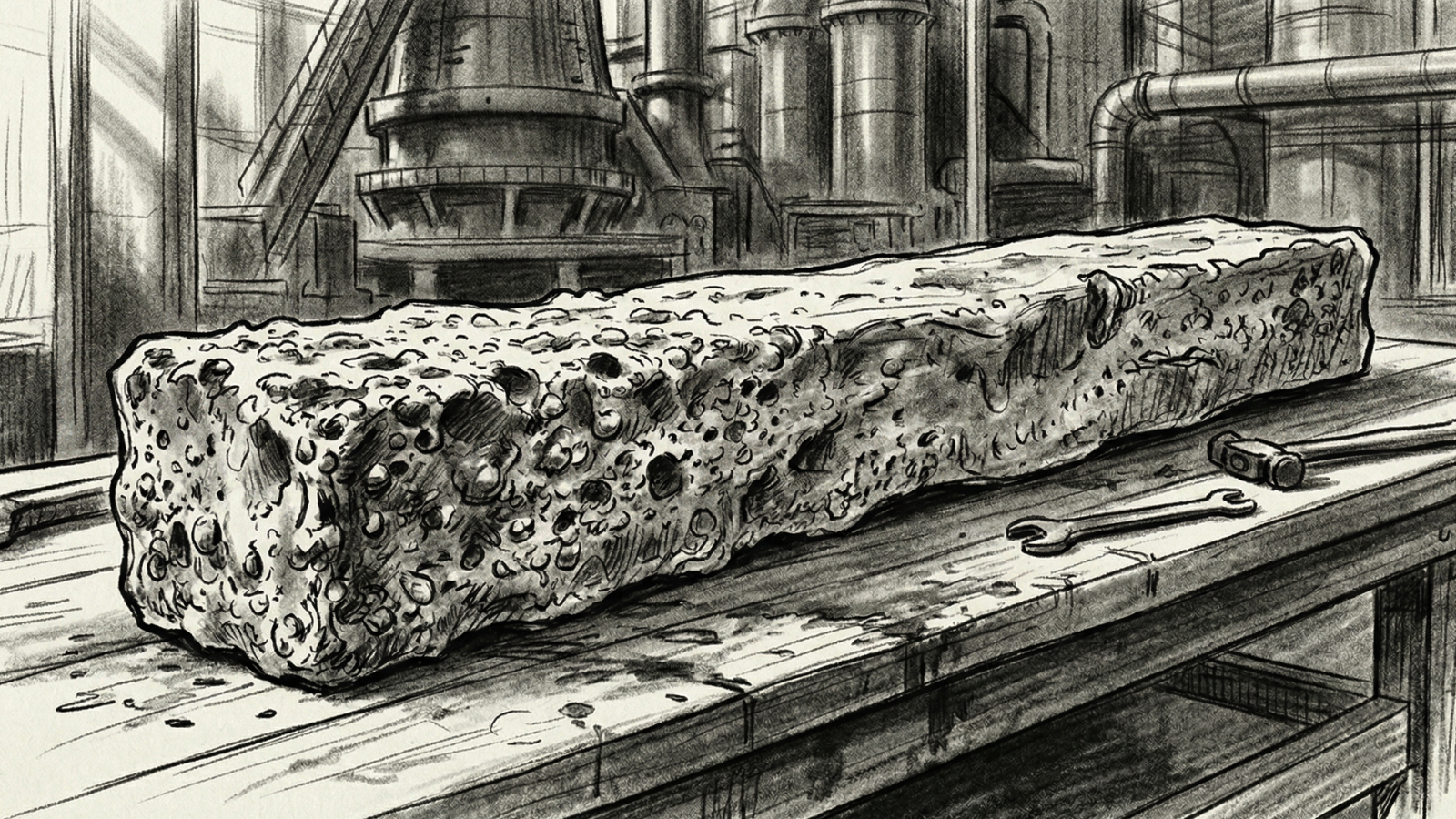
The Hutchings Museum in Lehi has a bar of steel from that first pour. It is rough and bubbly and about three feet long. It served no unique purpose. It is just a piece of steel, the first one, poured from a furnace made possible by Roosevelt's radio address, on land that once belonged to a farmer named Stone.
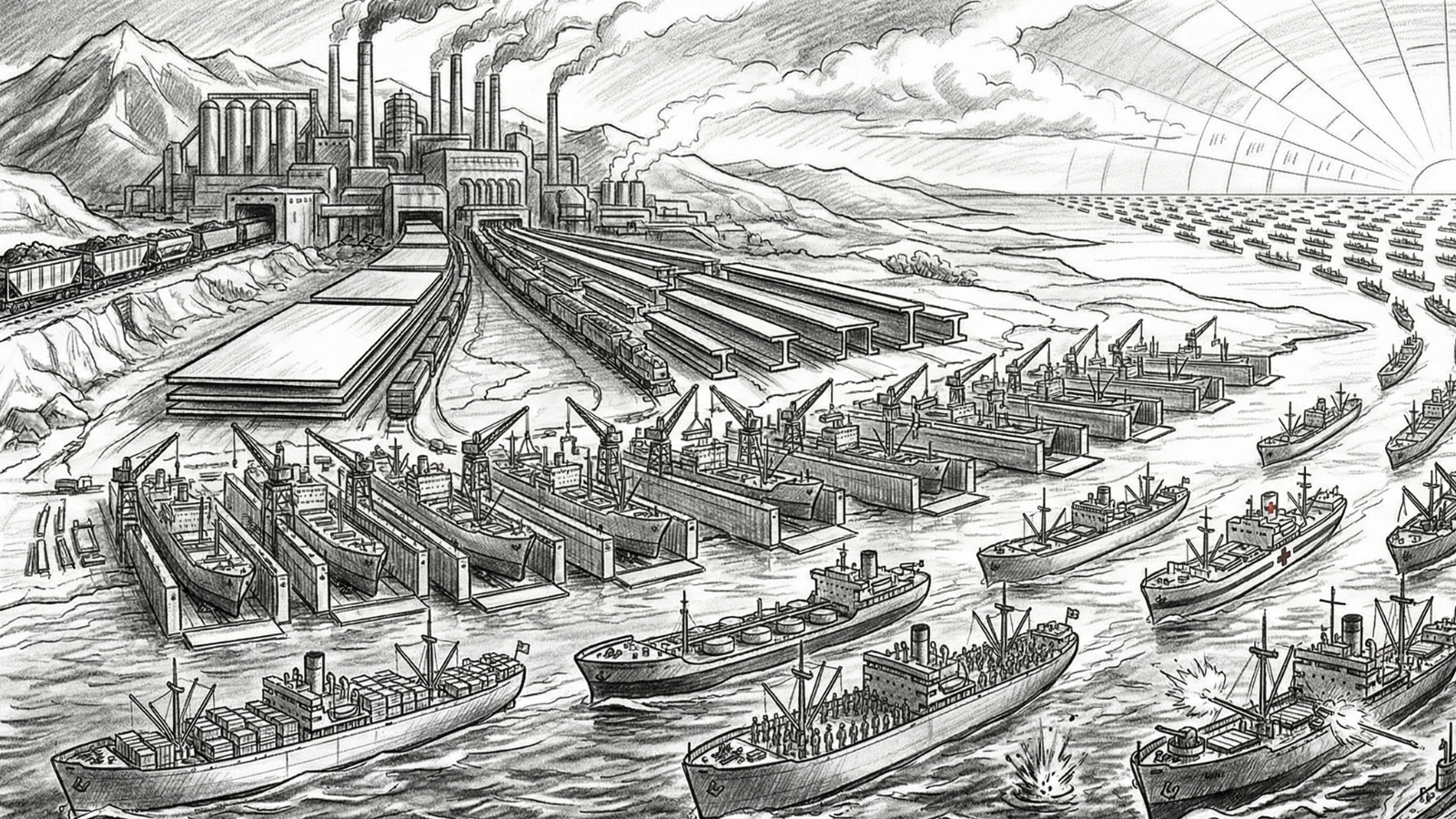
The plant was designed for a specific purpose. It was to supply 700,000 tons of plate and 200,000 tons of structural steel shapes per year for the rapidly expanding shipbuilding program on the West Coast. The steel would become Liberty ships.
Liberty ships were the workhorses of the war. They kept Britain supplied with goods, battling German U-boats across the Atlantic to deliver food, fuel, weapons, ammunition, and tanks. They served as troop transports, repair ships, hospital ships, and oil tankers. In five years, the United States produced 2,700 of them. Any group that could raise $2 million in war bonds could propose a name for a ship, and six Liberty ships were named in honor of Utah and Geneva Steel's contribution: the SS Joseph Smith, the SS Brigham Young, the SS Peter Skene Ogden, the SS Jedediah S. Smith, the SS Jim Bridger, and the SS Provo.
The SS Brigham Young was launched on August 17, 1942, christened by Emma Gates Bowen, granddaughter of Brigham Young and a celebrated opera singer trained in Germany and New York. Bowen was considered one of the greatest prima donnas the country ever produced. She was in her sixtieth year, teaching music in Utah. She stood before a ship named for her grandfather that would carry ammunition across oceans.
The SS Joseph Smith was launched in May 1943. In 1944, it broke apart and was scuttled in the Atlantic.
The SS Provo was launched at the Kaiser shipyard in Richmond, California, on June 28, 1944. Two Gold Star Mothers from Utah participated in the ceremony. They were Vilate Rhodeback and Mrs. Harvey Mendenhall. Both lost sons in the First World War. Now they stood at a California dockyard, christening a ship built from steel their neighbors made, named for their town, bound for a second war that took other people's sons.
No one recorded where Vilate Rhodeback was from. No one recorded Mrs. Mendenhall's first name.
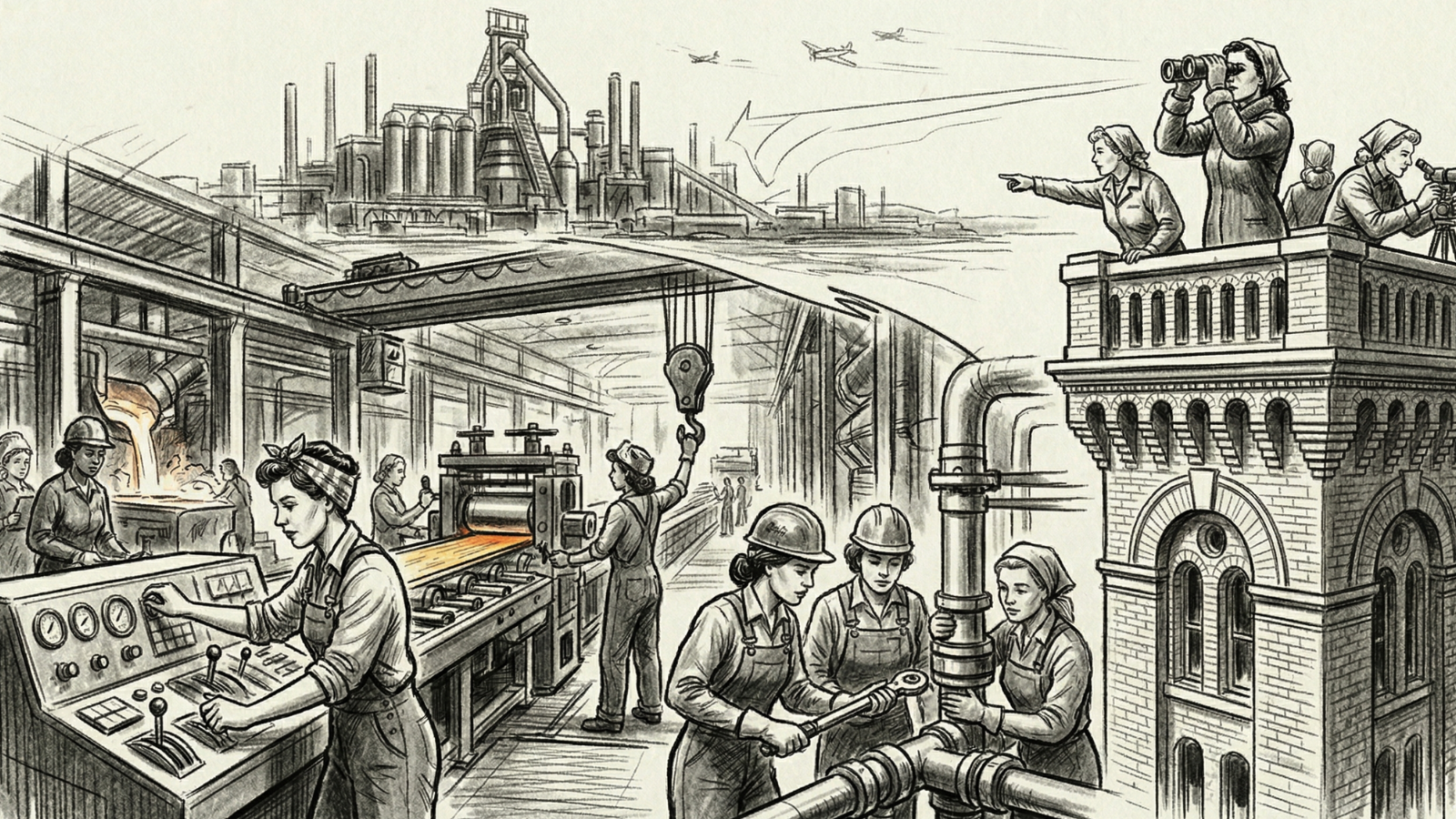
During the war, the plant employed approximately 4,200 workers and produced 634,000 tons of plate steel and 144,280 tons of structural shapes, plus a considerable quantity of steel shell billets. Geneva also produced steel for shell casings at an Army ordnance plant in Denver.
Manning the plant was a crisis of its own. The men who would have worked the blast furnaces and rolling mills were overseas. Help-wanted advertisements ran in the Deseret News in 1943, soliciting men aged 17 and older for blast-furnace, powerhouse, and mechanical operations. Advertisements appeared in major newspapers around the country. People came from other states.
Women made up twenty-five percent of the wartime workforce. They filled positions considered to be men's work, as women did at shipyards and munitions factories and aircraft plants across the country. At Geneva, they worked the lines and the operations that kept the mill running. The government also asked women to volunteer as lookouts at the top of the Veterans Memorial Building in Lehi, which is now the Hutchings Museum, scanning the sky for enemy planes that might come to bomb the steel plant. None of their names were recorded.
A thousand women worked at Geneva Steel during the war. Not one of them has been identified by name in any published source. The Intermountain Histories project at BYU has an entry on "Women at Geneva Steel." It contains no names from the wartime era. The oral history collections at the University of Utah and Utah Valley University cover World War II veterans from Utah County but do not appear to contain Geneva-specific interviews from the 1940s. The Lehi City Archives issued a public call through KSL, asking anyone who worked at Geneva to share their stories. They had, they said, very little information about the men and women who had worked there.
A thousand women. No names. The unknown is its own kind of history.
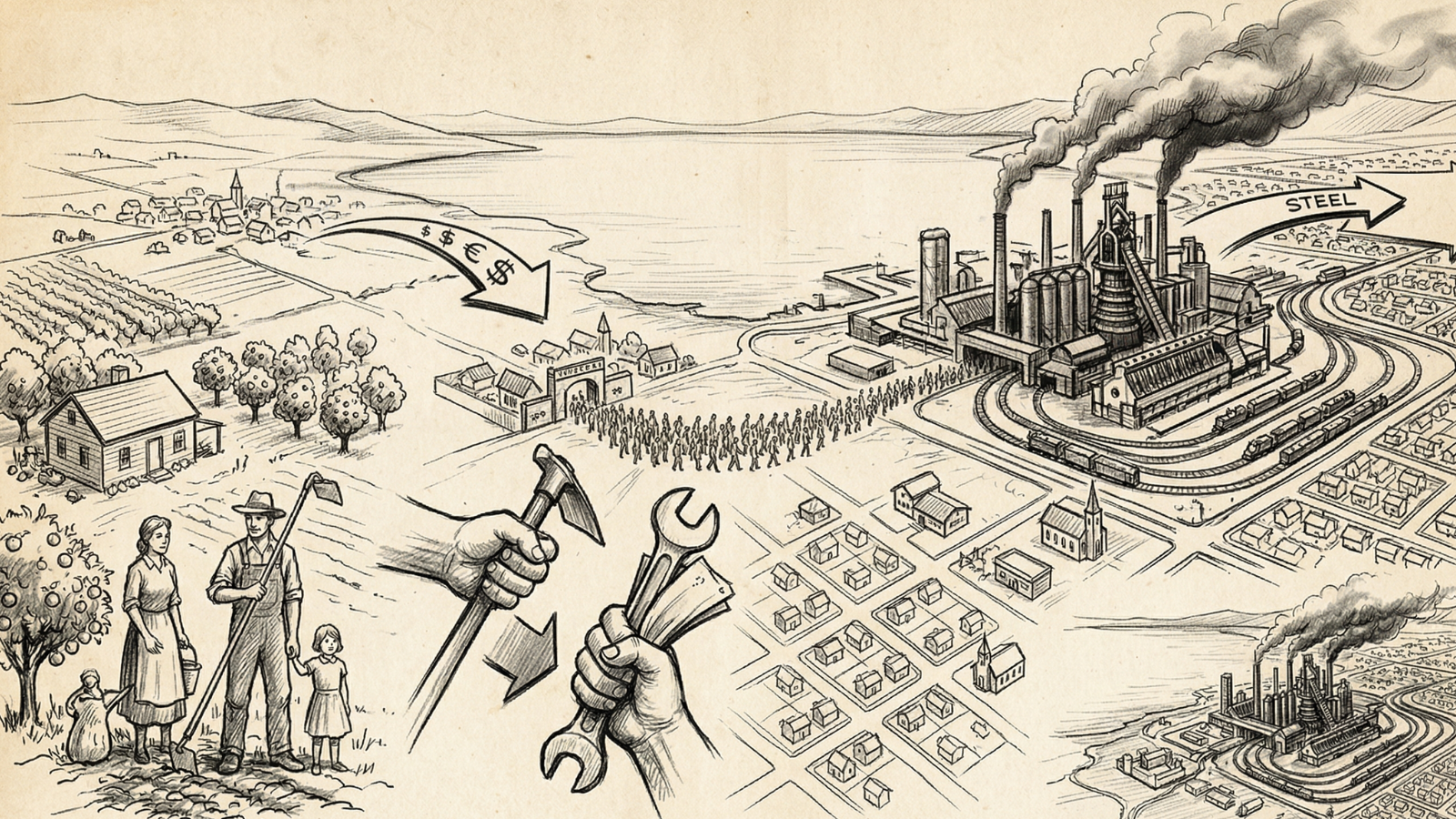
The plant paid wages well above the local average. This changed everything. People who had been farming orchards and raising families in small agricultural towns suddenly had access to industrial wages, and the population of Utah County began to grow in a way it had never grown before. Orem's population doubled every decade between 1940 and 1980, rising from 2,914 to 52,000. By 1960, Geneva Steel employed thirty percent of the workers in Utah County. Provo, the Garden City, began calling itself the Steel Center of the West.
The wages brought houses. The houses brought roads. The roads brought schools and shops and churches and all the ordinary infrastructure of American suburban life. What had been a valley of farms became a valley of subdivisions, and at the center of it, on the shore of Utah Lake, sat a complex of blast furnaces and coke ovens and rolling mills and seventy-six miles of internal railroad track, pouring smoke into the air and steel into the national economy.
I grew up in Spanish Fork in the 90s. My dad was a janitor. Every other kid in my class had a parent who worked at the plant. They wore better clothes. They had newer bikes. Geneva Steel was still running then.
Between 1939 and 1945, Utah's manufacturing output increased by 200%. The value added by manufacturing between 1939 and 1947 was $85 million, a 196 percent increase. Population shifts, societal changes, and evolving cultural patterns recast Utah from what one historian called an isolated and culturally backward state into an area much more closely tied to the national mainstream. Geneva Steel was the engine of that transformation.
Life Magazine, in its tenth anniversary issue dated November 25, 1946, called Geneva "the new decade's answer to the gloomy '30s, when all but the most optimistic American conceded that the expansion was over and the frontiers closed."
The engineers who designed the plant built the future into it. Their plans included the space needed to convert the mill to peacetime production. They drew the blueprints for what came after. When the war ended and production slowed to a crawl and the Utah County Industrial Development Committee scrambled to prevent the plant's closure, the conversion was already engineered into the walls.
In June 1946, the War Assets Administration accepted a $47.5 million bid from U.S. Steel. The plant had cost $205 million to build. Its actual value was estimated at more than $144 million. The sale included iron mines and quarries and coal mines. The stipulation was that U.S. Steel invest another $18.6 million in converting the plant to peacetime operations. Geneva would make steel for pipelines and highways and buildings and bridges and all the things that postwar America was about to need in quantities no one had yet imagined.
Roosevelt did not live to see any of it. He died on April 12, 1945, four months after that last winter of the war, thirteen days before Sergeant Kay and Sergeant Komo and Sergeant Hueson would have to find their own way home from Germany. The president who had proposed a steel mill in Utah in 1936 and then told the country in 1940 that the government stood ready to build what private industry would not, did not see Geneva reach full production. He did not see the Liberty ships named for Brigham Young and Joseph Smith cross the Atlantic. He did not see the valley of orchards become a valley of steel. He did not see the women on the rooftop in Lehi come down from their watch.
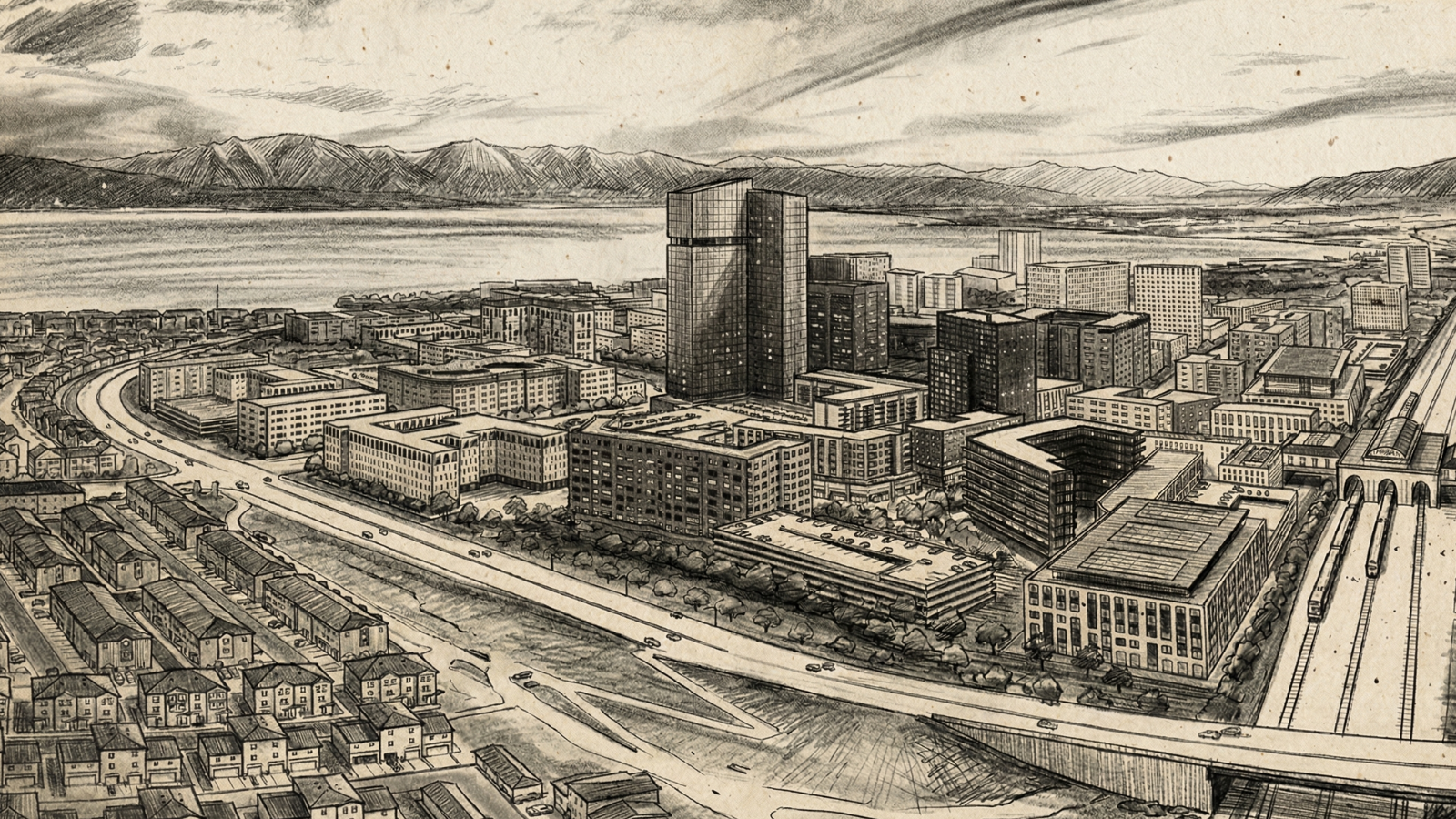
The plant is gone now. Every blast furnace, every coke oven, every rolling mill, every mile of internal track. The equipment was sold to a Chinese steel company for $35.3 million and shipped across the Pacific. The land was sold for $46.8 million to a developer. The water rights went for $88.5 million. The site is filling in with houses, theaters, a golf entertainment complex, and a commuter rail line. Vineyard's population has grown from 133 to more than 15,000. Utah City now rises on this land.
But there was a moment, between 1942 and 1946, when this valley of orchards became the steel center of the American West, when farmland became the largest wartime factory the government ever built, when women stood on rooftops in Lehi watching for Japanese bombers that never came, when three prisoners of war in Germany wrote a letter asking for jobs at a mill they could not see, and when ships named for Brigham Young and Joseph Smith and a small city on a lake carried steel and ammunition through submarine-infested waters to keep the world from falling.
That moment deserves more than fragments. It deserves names.
The Hutchings Museum in Lehi holds the first steel pour from Geneva's 1944 operations and welcomes visitors Monday through Saturday.
The L. Tom Perry Special Collections at Brigham Young University holds the Geneva Steel Records (MSS 3122).
The American West Center at the University of Utah maintains the "Saving the Legacy" oral history project for Utah's war veterans.
If your family's ancestors worked at Geneva Steel during the war, I'd like to hear from you. clint@utahn.com


