

Utah's never been closer to getting a Major League Baseball team. Salt Lake City and Nashville have emerged as the frontrunners for MLB expansion. Commissioner Rob Manfred wants one team in the East and one in the West. He wants it done before he steps down in early 2029. Nashville in the East. Salt Lake in the West.
The Larry H. Miller Company has secured over $3.5 billion in private investment for the Power District on Salt Lake City's west side. The Utah Legislature has approved up to $900 million in state funding for a stadium. The site is minutes from the airport, sits on a light rail line, and is targeted to be shovel-ready by October 2026. A new Deseret News/Hinckley Institute poll shows 69 percent of Utah voters support bringing a team here. The Athletic called Utah the frontrunner in the West. Betting odds give Utah a 22.2 percent chance, second only to Nashville at 33.3.
Big League Utah, the coalition led by the Larry H. Miller Company, includes Gail Miller, CEO Steve Starks, Steve Young, and former MLB players Dale Murphy and Jeremy Guthrie. Their message to MLB is clear: We're ready.
The numbers add up. Fastest-growing state. Youngest demographics. Highest median income among expansion markets. Shovel-ready site. Proven ownership group. Broad bipartisan support.
But the numbers don't tell the full story. Utah's been playing baseball for 125 years. And the story of those 125 years is not about market viability or stadium financing. It's a story about who gets a chance and who gets overlooked.
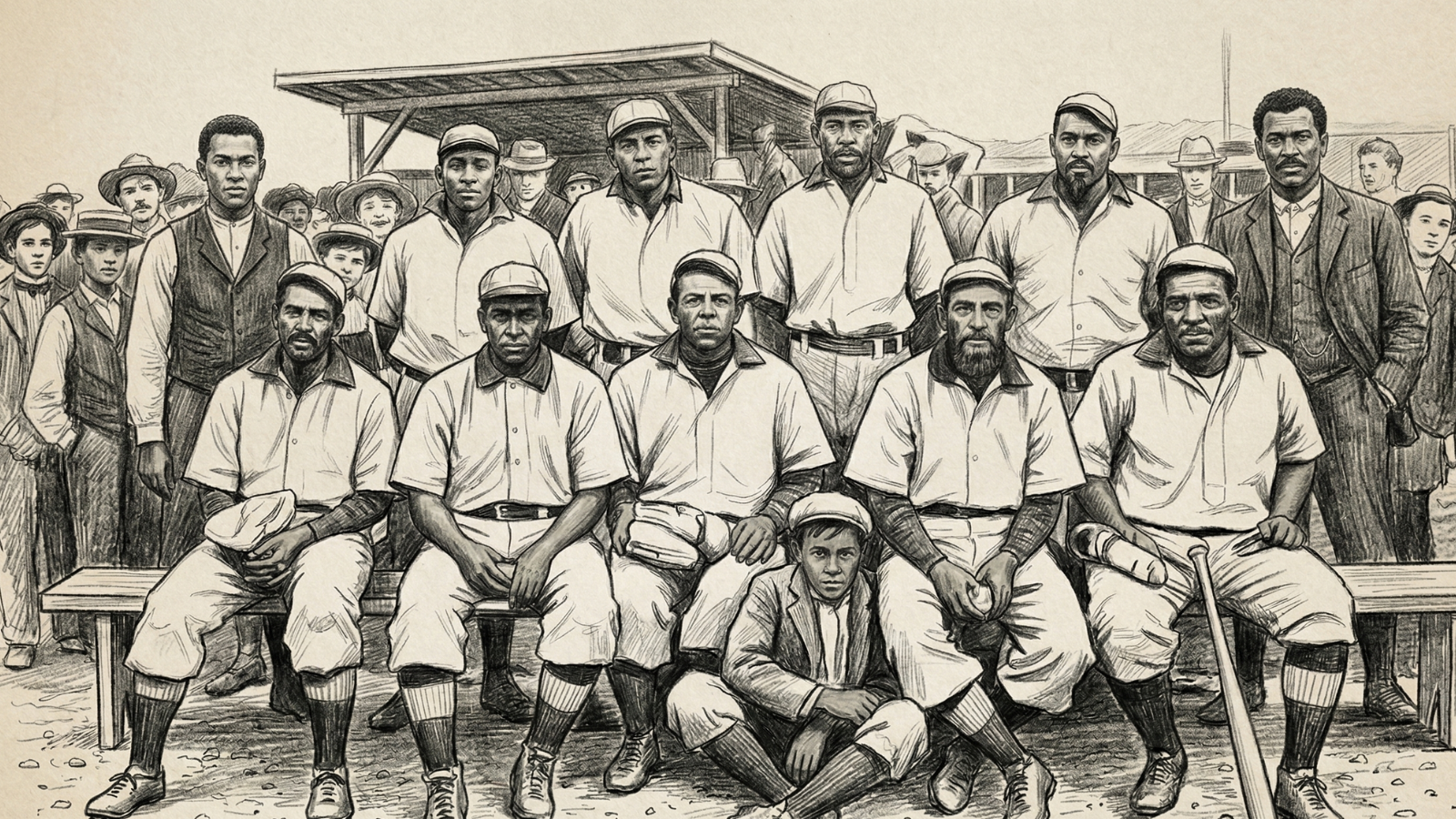
The Occidentals
In the early 1900s, Salt Lake City was home to an all-black baseball team called the Occidentals. They played white teams up and down the Wasatch Front. They barnstormed across the Western United States. Idaho. Colorado. Nevada. California. Forty years before Jackie Robinson broke the color barrier.
To understand what that means, you have to understand that Utah in the early 1900s was not merely a state. It was a religious society. And that society had a complicated, often ugly, relationship with black people.
Under Joseph Smith, the founder of The Church of Jesus Christ of Latter-day Saints, black men were ordained to the priesthood. The most well-known was Elijah Abel, ordained an Elder in 1836 in Kirtland, Ohio. Abel participated in temple ceremonies, received a patriarchal blessing from Joseph Smith's father, served missions to New York and Canada, and helped build the Nauvoo Temple as a carpenter. Smith declared that Abel "was entitled to the Priesthood and all the blessings." There is no reliable evidence that any black men were denied the priesthood during Smith's lifetime.
Then Smith was murdered. Brigham Young took over.
In two speeches before the Utah territorial legislature in January and February 1852, Young announced that men of African descent could no longer be ordained to the priesthood. His reasoning was anchored in the biblical curse of Cain. He drew on the book of Genesis to suggest that black skin and a flat nose were the "mark of Cain," and that black people could not hold the priesthood until all of Abel's posterity had received it first. He made it clear he was the first prophet of the Restoration to pronounce this restriction, acknowledging that no prior "prophet or apostle" had said it before him.
In the same session, Young defended slavery. "I am a firm believer in slavery," he told the legislature on January 23, 1852. He said that a master who "has a Negro and uses him well, he is much better off than if he was free."
Elijah Abel, the man Joseph Smith blessed and ordained, migrated to Salt Lake City in 1853. He petitioned Young to receive his temple endowment and be sealed to his wife and children. Young denied the petition.
Abel stayed anyway. He was active in his ward. He worked on the Salt Lake Temple with his own hands. A black man, told by his own church that he was not entitled to the blessings of the temple, showed up day after day to build it. He served another mission late in life and died in 1884 "in full faith of the Gospel." After his death, Church president Joseph F. Smith declared Abel's ordination "null and void."
The priesthood ban lasted 126 years. It was not lifted until June 1978, when Church President Spencer W. Kimball and the Quorum of the Twelve Apostles received a revelation extending priesthood ordination and temple blessings to all worthy members regardless of race. The Church today disavows the theories advanced in the past that black skin is a sign of divine disfavor, that it reflects actions in a premortal life, or that black people are inferior in any way.
And in this place, in the early 1900s, a black baseball team took the field and played white teams. They were not in a formal league. There was no sanctioning body. They just showed up and played.
We do not know their names. We do not know their records. We do not know if they won more than they lost or what happened to them when the season ended. Nobody wrote it down. The Bees' director of communications, Kraig Williams, stumbled upon information about the team years later while researching local baseball history. Without that accident, we might never have known they existed at all.
They played in a society that had formally declared them lesser. In towns named after Church leaders who believed black people bore the curse of Cain. Before paved roads. Before radio. Seventy-six years before the priesthood ban was lifted.
They played because the game was there and they wanted to play it. And no theology, no matter how confidently pronounced, could take that away.
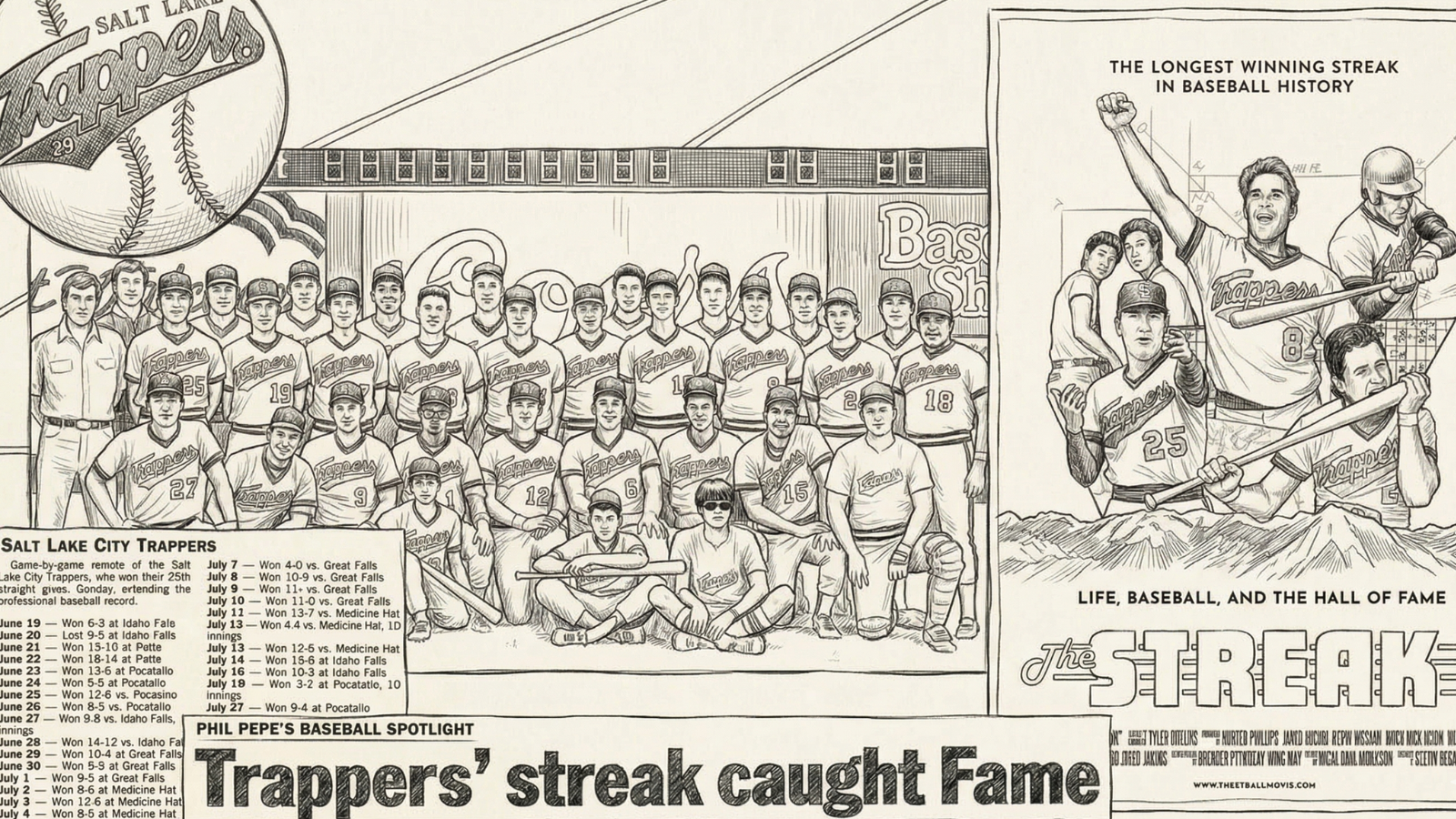
The Trappers
Eighty years later, another group of nobodies showed up.
The Salt Lake City Trappers were an independent rookie-level team in the Pioneer League. They arrived in 1985 after the Triple-A Salt Lake Gulls left town. No Major League affiliation. No farm system. No organizational resources. A group led by Van Schley brought the franchise to Salt Lake City and filled it with undrafted talent, overlooked players, and athletes cut everywhere else.
They made $500 a month. Part owners included current Los Angeles Angels owner Arte Moreno and actor Bill Murray.
Despite their lack of affiliation, the Trappers won the Pioneer League championship in their first two seasons, 1985 and 1986. Attendance set a Pioneer League record in 1986.
Then came 1987.
The roster that year was stranger than fiction. A shortstop who played the stock market. A six-foot-seven first baseman from Pago Pago who made earthenware pottery. A second baseman who'd been suspended by the NCAA for dropping his pants and mooning Mississippi State fans. Two Japanese draft picks from the Kintetsu Buffaloes who spoke no English. First baseman Matt Huff spoke for his teammates when he said, "We're still the nobodies. The outcasts of the outcasts."
On June 25, 1987, the Trappers played their home opener at Derks Field. They trailed 6-0 before storming back to beat Pocatello 12-6.
They did not lose for more than a month.
Twenty-nine straight wins. The longest winning streak in American professional baseball history. It still stands. Seventeen at home, twelve on the road, with long bus rides to small ballparks in Great Falls, Pocatello, Idaho Falls, and Medicine Hat. As they closed in on the record, it became a national sensation. The Trappers won four Pioneer League championships in total. Frank Colston's bat is in Cooperstown.
Thirteen of the 1987 Trappers went on to play in affiliated baseball. None reached the major leagues.
The scouts who didn't draft those players turned out to be right. Individually, they did not have what it takes. But together, for one summer, they were greater than their parts. They were playing rookie ball in Salt Lake City. They might as well have been a thousand miles from the majors. And yet they did something no major league team has ever done.
As former Trapper Ed Citronnelli said in the documentary The Streak, "For one summer, nobody could understand how this could be possible with such a group."
The Streak, directed by Kelyn Ikegami, won the Audience Award at the Nashville Film Festival and is now available on Amazon Prime Video and Apple TV. It spends as much time on what happened after the streak as on the streak itself. What happens when you peak before you turn 25 and life keeps going?
The franchise left Salt Lake City after 1992. It moved to Pocatello in 1993, then to Ogden in 1994, where it became the Ogden Raptors. The Trappers' direct descendants are still playing baseball in the state.
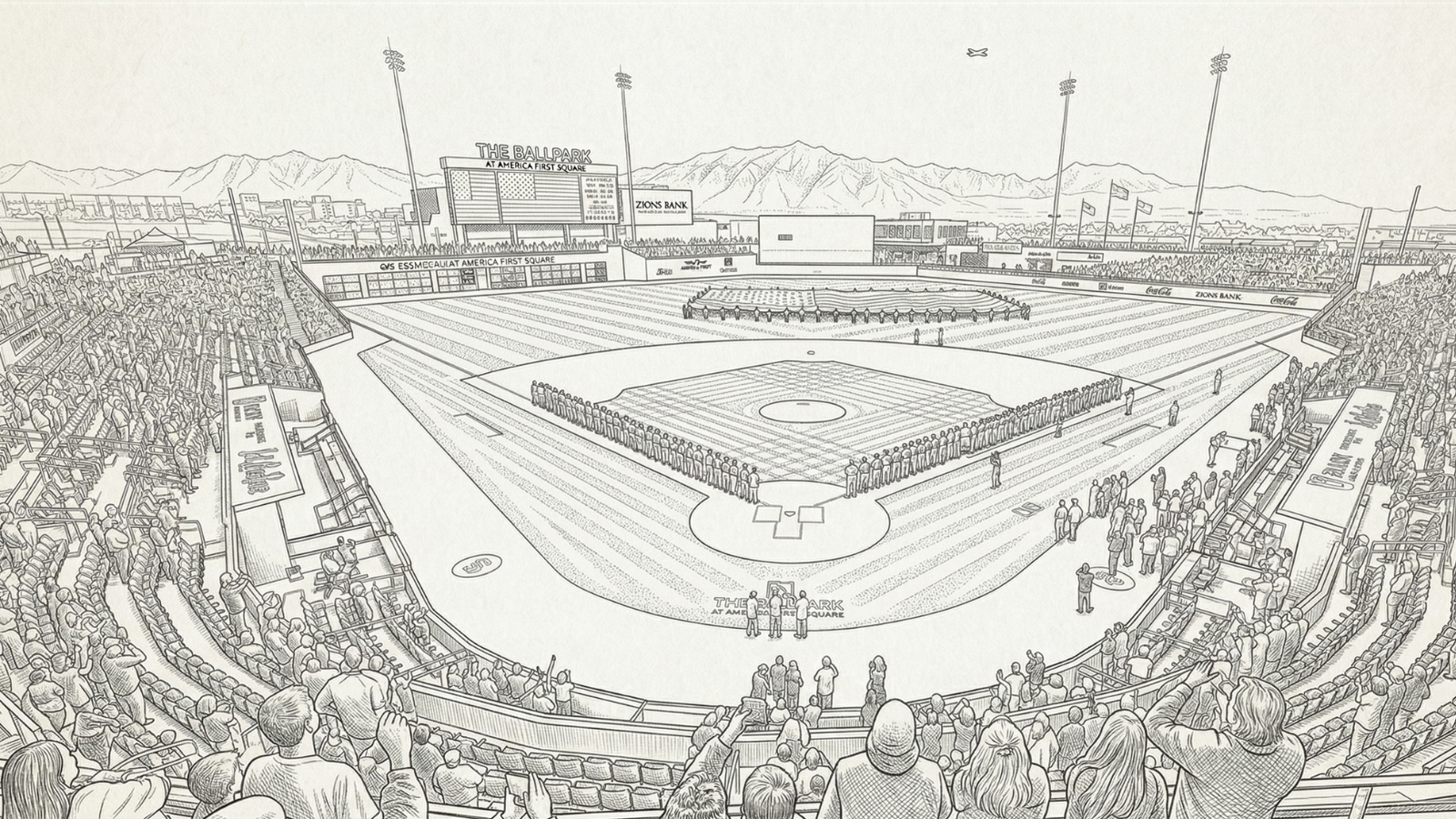
The Bees
Minor league baseball first began in Salt Lake City in 1900. The city cycled through teams with names that read like a lost poem of early statehood. The Rio Grande Rios. The Short Line Shorts. The White Wings. The Elders. The Fruit Pickers. The Mormons. The Skyscrapers. In 1915, the Salt Lake Bees were born into the Pacific Coast League, which was considered by many observers to be the equivalent of a third major league.
The jewel of the early Bees was Tony Lazzeri. A San Francisco kid who got a tryout with the Bees in 1922 after a friend convinced manager Duffy Lewis to take a look. He batted .192 in 45 games and got sent down.
He came back.
In 1925, Lazzeri batted .355 with 60 home runs, 222 RBIs, and 202 runs scored in 197 games. All PCL records that still stand a hundred years later. His 60 home runs were the professional baseball record until Babe Ruth matched it two years later. Salt Lake's Italian-American community gave him his name. A fan named Cesare Rinetti shouted encouragement in Italian from the stands, and the crowd adopted "Poosh 'Em Up Tony" as a rallying cry.
The Cubs passed on him. The Reds passed on him. Both because of his epilepsy. The Yankees took a chance. Lazzeri won five World Series championships and was inducted into Cooperstown in 1991. He built his legend in Salt Lake City before the world knew his name.
But the Bees could not keep him. And they could not keep themselves. Other PCL owners resented the high cost of travel to Salt Lake City. After 11 seasons, the Bees moved to Los Angeles in 1926, becoming the Hollywood Stars and, eventually, the San Diego Padres.
The game left. It came back. It always came back. Salt Lake went without a team until 1946. The Bees returned to the PCL, won the league title in 1959, became the Angels, won a championship in 1971, became the Gulls, won another in 1979, lost the franchise to Calgary, endured a decade without PCL baseball, then welcomed the Portland Beavers in 1994 and broke the all-time PCL attendance record.
In 2006, Larry H. Miller brought back the Bees name. The name itself is the state. The original name of the Mormon settlement, Deseret, is said to be the word for "honeybee" in the Book of Mormon. A beehive appears on the state flag.
Today, the Bees play at The Ballpark at America First Square in Daybreak. That move cleared the Salt Lake market for a major league stadium in the Power District.
A place becomes a baseball city because the game matters there. Because an all-black team barnstormed across the Wasatch Front and nobody even wrote down their names. Because a future Hall of Famer hit 60 home runs in a city that most baseball people dismissed as too far away and too small. Because a group of undrafted nobodies making $500 a month won 29 straight games and ended up in Cooperstown.
Baseball has always belonged to Utah. It's always been here. It's time to call it up to the show.


